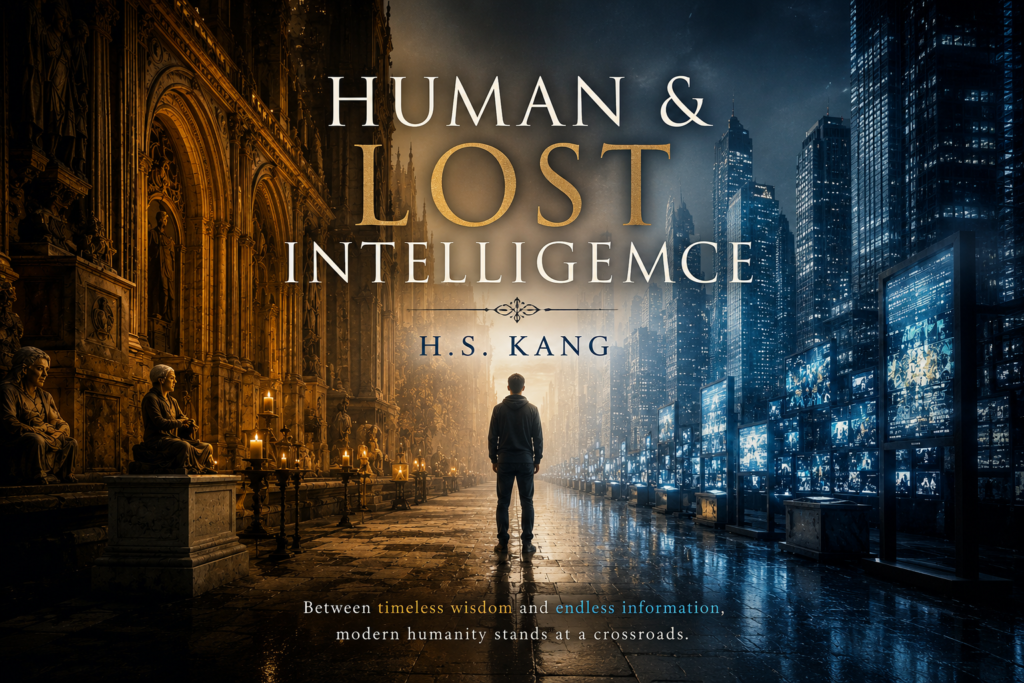
Every generation is shaped by the systems surrounding it. Ancient civilizations were shaped by survival. Industrial societies were shaped by machinery, factories, and discipline. The modern world, however, is increasingly shaped by something less visible but far more psychologically intimate: algorithms.
For most of human history, identity formed slowly.
People discovered themselves through family, struggle, culture, work, relationships, silence, religion, community, and lived experience. A person’s understanding of who they were emerged gradually through years of interaction with the physical world and the people around them.
Today identity forms differently.
Modern humans wake up each morning inside digital environments specifically designed to capture and influence attention. Before many people even speak to another human being, they have already consumed opinions, images, trends, outrage, advertisements, short videos, emotional stimulation, and algorithmically selected information tailored precisely to their psychological patterns.
This transformation may be one of the largest psychological shifts in human history.
The internet did not merely change communication.
It changed the environment in which human identity develops.
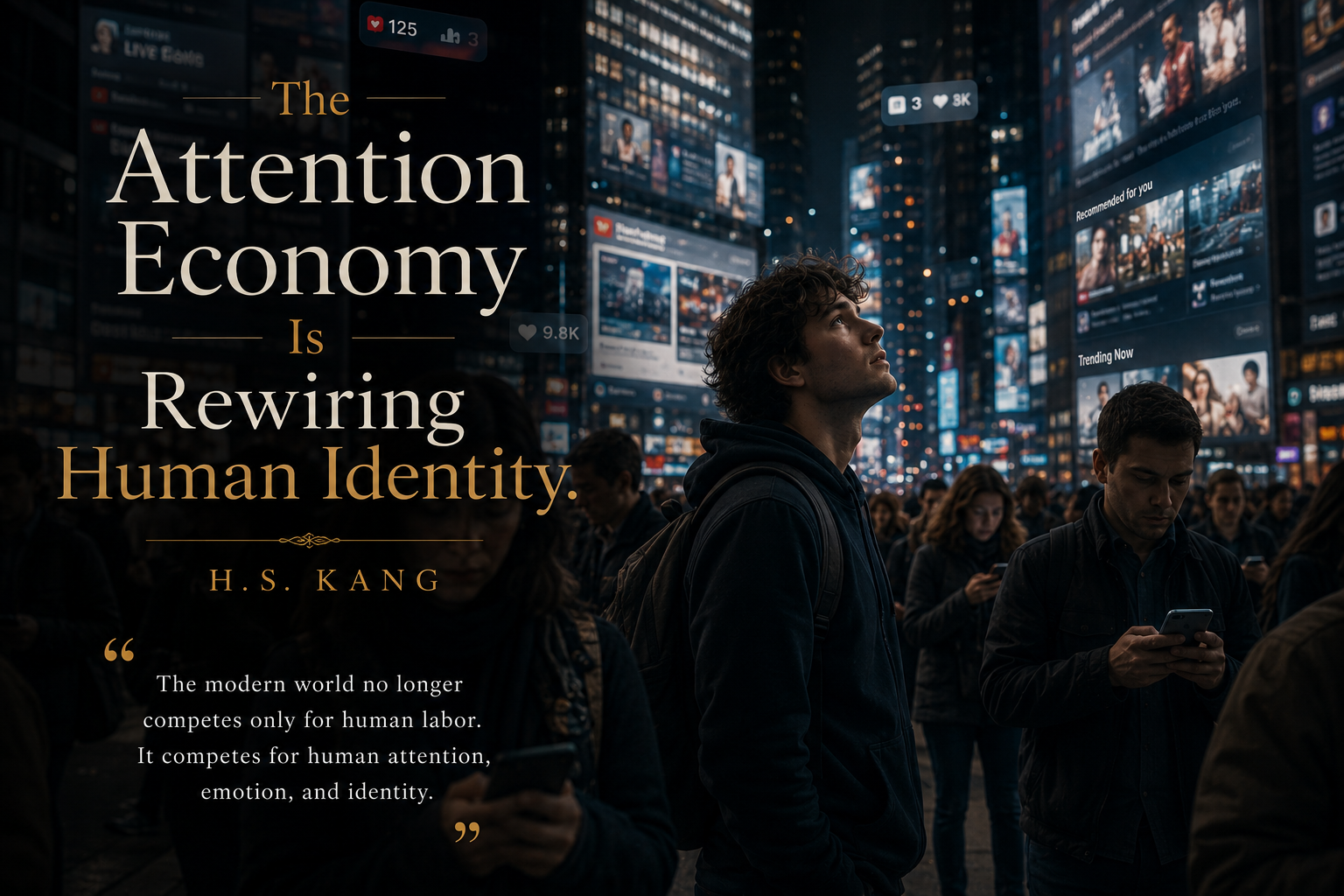
Social media platforms often present themselves as neutral technologies connecting people globally. But beneath the surface, these systems are driven by a far more powerful economic force: attention. Human attention became one of the most valuable resources in the modern economy. The longer platforms can hold it, the more profitable they become.
This created an entirely new kind of competition.
Companies no longer compete only for money or customers.
They compete for human consciousness itself.
Every notification, recommendation, autoplay video, personalized feed, trending topic, emotional headline, or infinite scroll system is part of a larger psychological architecture designed to keep the human mind engaged for as long as possible.
The result is not merely distraction.
It is gradual psychological conditioning.
Algorithms learn what triggers emotion. They observe what creates outrage, curiosity, insecurity, excitement, fear, loneliness, validation, or desire. Over time, digital systems begin constructing highly personalized environments capable of shaping behavior with extraordinary precision.
In some ways, modern algorithms understand human impulses more consistently than humans understand themselves.
They know what people pause on.
What they fear.
What they desire.
What keeps them scrolling late into the night.
What emotional states increase engagement.
What insecurities generate consumption.
This creates a strange modern paradox:
Human beings developed technologies powerful enough to study human behavior at enormous scale, yet many individuals remain deeply disconnected from their own inner psychology.
The consequences extend far beyond entertainment.
The attention economy increasingly shapes identity itself.
Earlier generations often formed identity through stable communities and direct physical interaction. Modern identity, however, increasingly forms through performance, comparison, visibility, and digital feedback loops. Many people no longer simply live their lives. They experience life while simultaneously imagining how it appears to others online.
Moments become content.
Experiences become performances.
Opinions become signals.
Identity becomes partially externalized into public reaction.
A person posts a thought online and immediately receives feedback from strangers, metrics, algorithms, and invisible recommendation systems. Over time, humans naturally adapt to environments that reward certain behaviors and discourage others. The danger is not only that algorithms influence attention. The danger is that they slowly influence self-perception itself.
People begin shaping identity around what performs well digitally rather than what feels deeply authentic internally.
This psychological shift affects nearly every area of life.
Politics becomes more emotionally extreme because outrage generates engagement.
Beauty standards become distorted because comparison becomes constant.
Relationships become fragile because validation becomes externalized.
Attention spans shrink because stimulation becomes continuous.
Even self-worth becomes increasingly tied to metrics: likes, followers, visibility, reactions, views, and approval from strangers.
The modern human nervous system was never designed for permanent social comparison with millions of people simultaneously.
Yet millions now live inside exactly such conditions every day.
This creates a subtle but powerful psychological instability. Many people feel emotionally restless without fully understanding why. They consume endless stimulation yet struggle to feel internally grounded. They know more about global events, celebrity lives, internet trends, and online debates than about the deeper structure of their own mind.
Information expanded dramatically.
Inner stillness did not.
One of the strangest effects of the digital age is that humans now spend enormous amounts of time reacting while spending very little time reflecting. Earlier forms of life contained more natural silence. Waiting existed. Boredom existed. Solitude existed. Long stretches of uninterrupted thought existed.
Modern systems increasingly eliminate those spaces.
The moment discomfort appears, stimulation becomes available instantly.
A moment of silence becomes scrolling.
A moment of anxiety becomes entertainment.
A moment of loneliness becomes digital consumption.
The human mind rarely remains alone long enough to fully observe itself.
This matters more than it first appears.
Self-awareness requires psychological space. Reflection requires stillness. Identity develops not only through stimulation but through the ability to observe one’s own thoughts, emotions, contradictions, desires, and fears without constant interruption.
When attention becomes permanently fragmented, identity itself can become fragmented.
The effects are especially visible among younger generations growing up entirely within algorithmic environments. For many young people, there has never been a world without social media, digital comparison, recommendation systems, or online identity performance. Their psychological development occurs inside environments engineered to maximize engagement rather than emotional stability.
This does not mean technology is inherently evil.
Digital systems have created extraordinary opportunities. The internet connected humanity in unprecedented ways. People can learn, create, communicate, collaborate, and express themselves globally. Entire communities and careers now exist because of digital platforms. Information became democratized in ways earlier civilizations could never imagine.
But every technological revolution reshapes human psychology alongside human capability.
The industrial revolution transformed physical labor.
The digital revolution transformed human attention.
And the algorithmic age may now be transforming identity itself.
This transformation becomes even more important in the age of artificial intelligence. AI systems are rapidly becoming capable of predicting human behavior, generating personalized content, simulating emotional interaction, and adapting dynamically to individual psychology. The more these systems evolve, the more human beings may struggle to distinguish between authentic desire and algorithmically amplified desire.
The future danger may not be a world controlled by machines in a science-fiction sense.
The deeper danger may be a civilization where humans slowly lose the ability to think independently from systems constantly shaping perception itself.
A human being who cannot protect their attention eventually struggles to protect their identity.
Because attention is not merely focus.
Attention determines what enters consciousness repeatedly enough to shape belief, emotion, memory, desire, and ultimately personality.
What humans repeatedly consume slowly becomes part of their psychological architecture.
This is why attention may become one of the defining human battles of the twenty-first century.
Not simply productivity.
Not efficiency.
Attention.
The ability to consciously decide what deserves entry into the human mind.
Earlier civilizations often trained attention deliberately through prayer, craftsmanship, meditation, reading, philosophy, music, ritual, apprenticeship, or deep physical work. These activities slowed the mind enough for presence and self-awareness to emerge.
Modern systems often move in the opposite direction. Speed, stimulation, reaction, novelty, and emotional intensity dominate digital environments because they maximize engagement.
The result is a civilization becoming increasingly informed yet increasingly mentally scattered.
People consume more information than any generation in history while struggling to maintain emotional clarity.
And perhaps this explains why so many individuals today quietly feel disconnected even while constantly connected.
The modern world gave humanity unlimited access to information, entertainment, and digital interaction.
But it also created environments capable of influencing identity at unprecedented scale.
The question is no longer only whether humans control technology.
The deeper question is whether humans still fully control their own attention.
Because once attention becomes permanently outsourced to algorithms, self-understanding becomes increasingly difficult to sustain.
And perhaps the future of human freedom will depend less on access to information and more on the ability to remain psychologically sovereign within systems designed to continuously shape perception itself.