Every human has met someone who appeared successful on paper but was quietly lost in life. A person with degrees, qualifications, technical skills, and years of education — yet carrying a strange uncertainty beneath the surface. They know how to work, compete, and survive modern systems, but struggle to answer simpler questions: Who am I? What kind of mind do I possess? What kind of work gives me meaning? What am I naturally built for?
This silent confusion has become so common that modern society barely notices it anymore.
The modern world has created more educated people than any civilization in history. Humanity has access to universities, certifications, online courses, and digital knowledge from every corner of the planet. A teenager with a smartphone can now access more information in a single day than many scholars encountered in entire lifetimes centuries ago.
Yet despite this explosion of information, many people still feel internally disconnected from themselves.
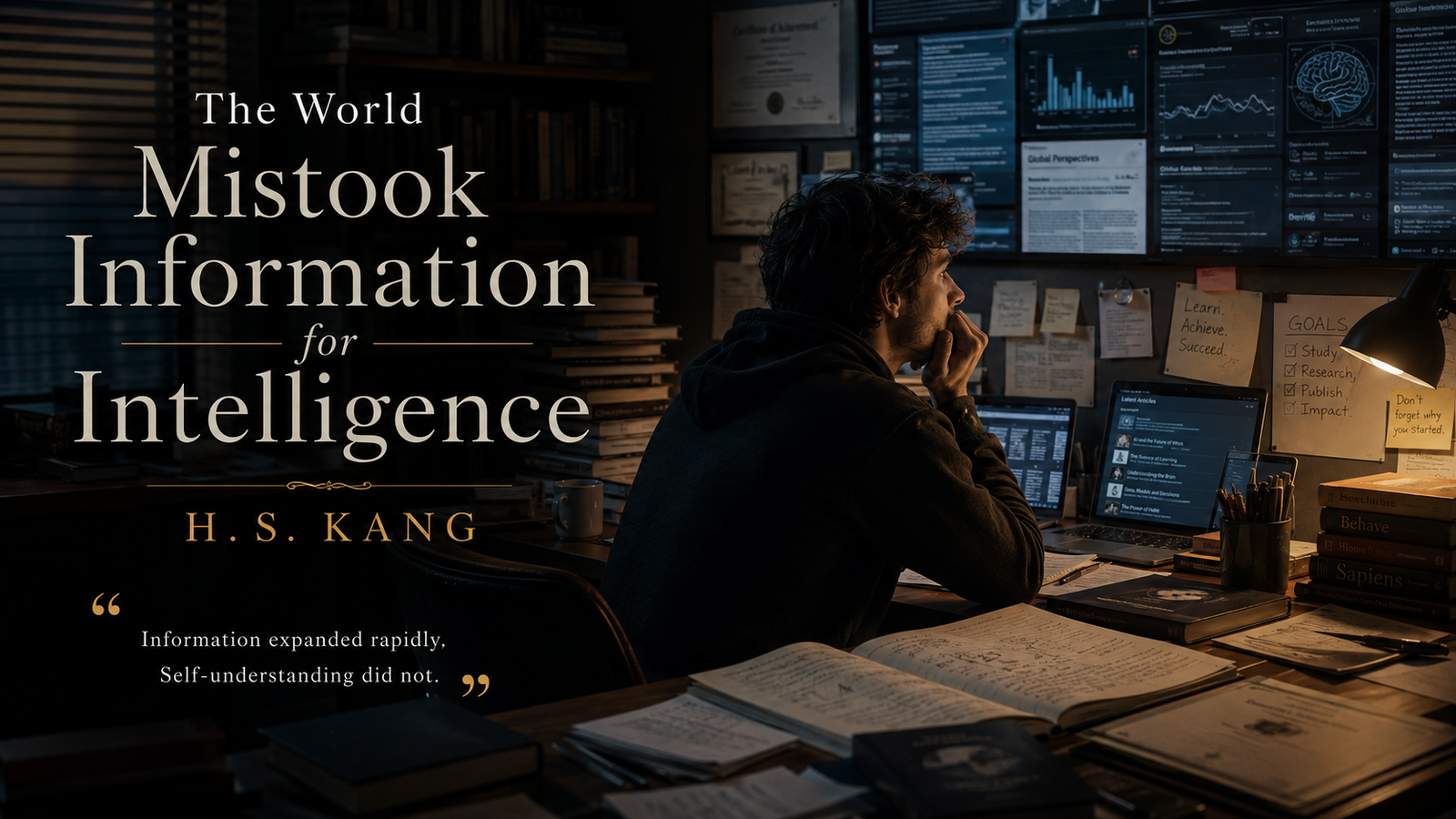
The problem is not that modern education failed to teach humans how to think. The deeper problem is that it rarely taught humans how to understand themselves.
Modern systems became extraordinarily effective at transferring information. They taught people how to memorize, process, analyze, compete, calculate, and specialize. These abilities helped build modern civilization itself — scientific advancement, medicine, engineering, technology, and global communication all emerged from disciplined systems of learning and accumulated knowledge.
This is not an argument against education. It is an argument about the narrow definition of intelligence that modern systems came to reward.
For generations, intelligence became increasingly associated with measurable performance: grades, examination scores, analytical speed, and technical competence. These abilities matter deeply. But as psychologist Howard Gardner argued in his theory of multiple intelligences, human cognitive capability extends far beyond any single scale — encompassing emotional understanding, spatial imagination, interpersonal sensitivity, creative instinct, and self-awareness alongside analytical reasoning. A civilization that measures only one or two of these dimensions is not measuring intelligence fully. It is measuring convenience.
A student can spend fifteen years inside educational systems and still graduate without understanding their own cognitive nature. They may know advanced mathematics yet remain disconnected from their emotional patterns. They may understand economic theory while having little insight into their own attention, motivation, or identity. They may enter careers because those careers appear stable or financially respectable — without ever asking whether their inner architecture aligns with the life they are building.
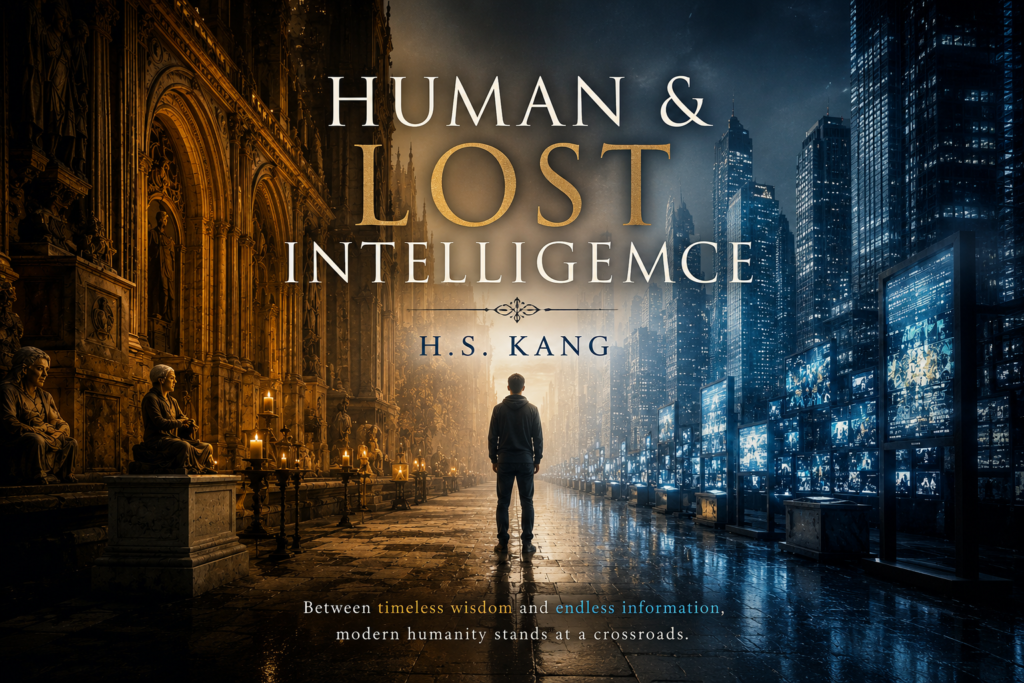
This creates one of the strangest contradictions of modern civilization: humanity has become highly informed, yet many humans remain deeply unfamiliar with themselves.
Earlier civilizations were not perfect. Many lacked scientific understanding, equality, or the access to knowledge that modernity rightly expanded. But earlier societies often recognized different forms of human capability more naturally. A storyteller, healer, architect, farmer, philosopher, or craftsman each represented a valuable expression of intelligence. Human roles were often connected more directly to observable temperaments, lived abilities, and apprenticeship — not standardized metrics applied uniformly to every mind.
Standardization brought enormous advantages. It allowed nations to educate millions efficiently and created scalable systems capable of training engineers, doctors, scientists, and administrators. But the same systems that expanded opportunity also created pressure toward uniformity. Humans were increasingly evaluated through narrow metrics that rewarded certain forms of cognition while quietly rendering others invisible.
The child who memorized quickly succeeded. The child who sat still succeeded. The child who performed well under examination pressure succeeded. But the deeply imaginative child often appeared distracted. The visually gifted student felt inferior in heavily language-based systems. And the socially intelligent individual may never have realized that what they naturally possessed was a form of intelligence at all.
Over time, millions of people quietly internalized a dangerous belief: if the system does not measure my strengths, perhaps my strengths do not matter.
This psychological effect reaches far beyond classrooms. It shapes identity itself. Many adults carry invisible feelings of inadequacy — not because they lack ability, but because their abilities were never properly recognized by the environments around them. Some people spend decades trying to become successful versions of someone else, never fully inhabiting their own mind.
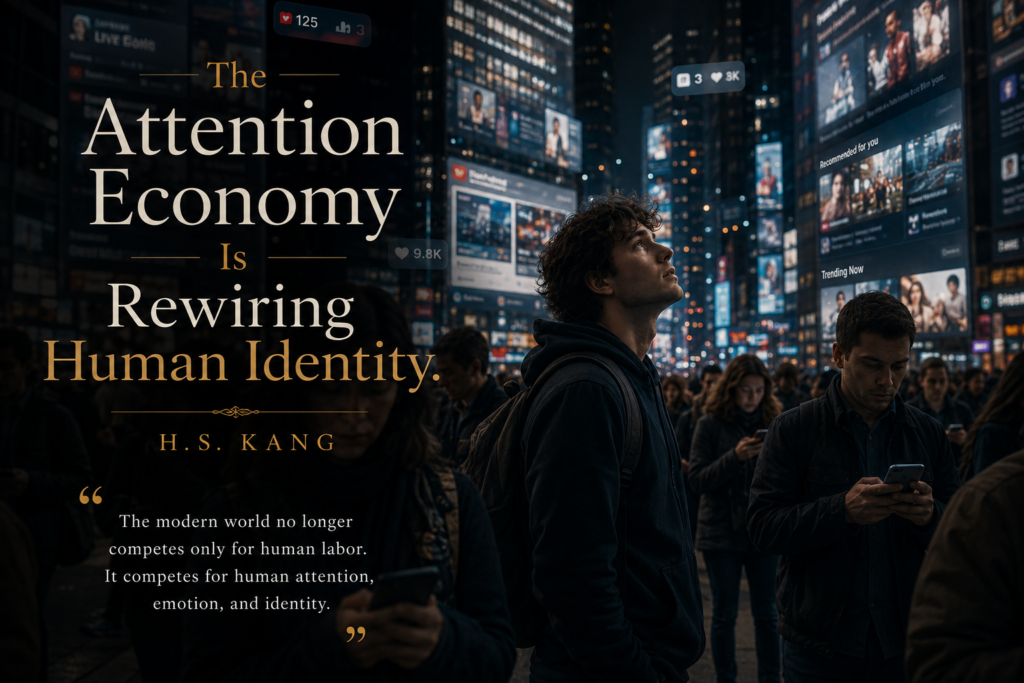
Modern civilization also transformed the meaning of success. Social media, career competition, and digital culture constantly expose people to idealized versions of achievement. The result is a generation that knows how to compare itself endlessly but struggles to understand itself honestly. Information flows without pause; reflection becomes increasingly rare.
A person can obtain the degree, build the career, reach the milestone — and still quietly feel disconnected from themselves. Because external achievement and internal alignment are not always the same thing.
Modern education also emerged during a very different historical moment. Many systems were designed during industrial eras where economies needed large numbers of disciplined workers capable of functioning within structured environments. Efficiency, consistency, and specialization became highly valuable traits. But the future demands something more complex.
Artificial intelligence is already transforming how humans interact with information. Machines can now retrieve knowledge, process data, generate text, analyze patterns, and automate technical tasks faster than most humans ever could. As information becomes increasingly externalized into machines, the dimensions of intelligence that are distinctly human — creativity, adaptability, emotional depth, ethical reasoning, and the capacity for genuine meaning-making — may finally become the ones that matter most.
The irony is striking. At the exact moment machines are becoming better at information processing, humans may finally be forced to rediscover that intelligence was never only about information processing in the first place. The future may belong less to those who simply know the most, and more to those who understand themselves most deeply.
What if education cared as deeply about self-understanding as it does about academic performance? What if discovering a student’s natural cognitive strengths — their emotional intelligence, creative capacity, social awareness — mattered as much as their examination results?
These are not merely educational questions. They are civilization questions.
A society filled with technically skilled but internally disconnected people creates real and measurable consequences. Anxiety rises. Meaning declines. Attention fragments. People become easier to manipulate through algorithms, trends, and endless comparison — because they never developed strong internal foundations. A human being who does not understand themselves deeply becomes vulnerable to external definitions of worth.
Knowledge matters profoundly. But knowledge without self-understanding can still produce confusion. A civilization can become extraordinarily advanced while its people remain psychologically adrift.
The modern world expanded information rapidly. Self-understanding evolved far more slowly.
The next stage of human progress may not come only from creating more intelligent machines. It may come from rediscovering the deeper intelligence already within human beings — the intelligence of self-awareness, attention, emotional understanding, creativity, and meaningful direction.
Because education should not only prepare humans to survive the world. It should also help them understand who they are within it.